1. What is a smart contract?
A smart contract is a computer program stored and executed on a blockchain that automatically performs pre-defined actions when specified conditions are met. Instead of relying on a trusted intermediary or manual processing, smart contracts use code to ensure that processes are executed transparently, consistently, and in a verifiable manner.
The concept of the smart contract was first proposed by computer scientist Nick Szabo in 1994, but it only became widely adopted after Ethereum introduced the Ethereum Virtual Machine (EVM) in 2015, enabling smart contracts to be deployed at scale.
At its core, a smart contract follows a simple principle: when predefined conditions are met, predefined actions are executed. Once deployed on the blockchain, the contract's logic runs exactly as programmed, reducing reliance on intermediaries, minimizing manual intervention, and increasing trust in digital transactions. On a national blockchain such as NDAChain, smart contracts can support use cases including product traceability, digital certificate verification, digital asset management, and public service automation.
🔑 Read more: What Is a Smart Contract? Smart Contracts on Vietnam’s National Blockchain in 2026
2. How do smart contracts work?
The execution flow of a smart contract on a blockchain typically consists of four main steps:
Programming the contract terms: Developers write the conditions and corresponding actions as code. For example, once a shipment is scanned and confirmed at a port, the system automatically updates its status and issues the corresponding certificate.
Deploying to the blockchain: The contract code is deployed to the blockchain and assigned a unique address. From that point onward, the contract exists on-chain and can be accessed and verified by nodes across the network.
Triggered by an input event: A blockchain transaction, user action, or data from an external system invokes the contract, which checks whether the predefined conditions have been satisfied.
Automatic execution and recording: Once the conditions are met, the contract automatically executes the corresponding actions and records the results on the blockchain ledger. These records are transparent, verifiable, and resistant to unauthorized modification.
An important component in this process is the oracle, the bridge that brings off-chain data onto the blockchain. Because blockchains cannot natively observe real-world events, oracles provide information such as cold-storage temperature, shipment status, inspection results, or customs clearance confirmations, allowing smart contracts to execute accurately based on real-world conditions.
3. How do smart contracts operate on a national blockchain?

On a national blockchain, smart contracts are more than self-executing code. They function as a business logic layer that digitizes processes requiring strong legal compliance, trusted data, and clear accountability. When predefined conditions are met, the contract automatically performs the programmed actions and records the results on the blockchain ledger so that all participating parties can verify them.
Unlike public blockchains, smart contracts on a national blockchain operate within a permissioned environment, where validators have verified identities, the consensus mechanism is governed, and data access is controlled through authorization policies. This makes smart contracts particularly suitable for applications such as product traceability, digital certificate issuance, data verification, digital asset management, and public service automation.
🔑 Read more: Vietnam's National Blockchain and the Foundation of Trust Infrastructure in the Data Economy Era
On NDAChain, the EVM-compatible Smart Contracts layer enables developers to use Solidity and familiar development tools while benefiting from the performance, near-instant finality, and regulatory compliance provided by a national blockchain infrastructure.
4. Real-world examples of smart contracts on a national blockchain
Example 1: Traceability for exported agricultural products
As a coffee shipment passes through each stage of the supply chain from the farm and warehouse to the inspection agency and export port—each verification scan can trigger a smart contract to update the shipment's status. Once predefined conditions are met, such as quality inspection, export documentation, or compliance with EUDR requirements, the contract automatically issues a digital certificate linked to a GS1 identifier. This mechanism is well suited for applications such as NDATrace for agricultural product traceability.
🔑 Read more: Bac Ninh lychees apply blockchain-based traceability
Example 2: Issuing digital diplomas and certificates
In the education sector, institutions can use smart contracts to issue diplomas as Verifiable Credentials (VCs). Once a student completes the academic program, the system automatically issues a digital credential bearing the institution's digital signature. Employers and receiving organizations can instantly verify the credential on the blockchain without having to contact the issuing institution manually, significantly reducing the risk of diploma fraud.
Example 3: Public service automation
In public administration, smart contracts can automate processes such as updating application statuses, verifying eligibility for government support, or triggering the next processing step once all required data has been submitted.
This approach reduces manual intervention, improves transparency, and provides the foundation for faster, more accurate, and verifiable public services built on a national blockchain.
🔑 Read more: Vietnam's National Blockchain and the Foundation of Trust Infrastructure in the Data Economy Era
5. Advantages and limitations of smart contracts
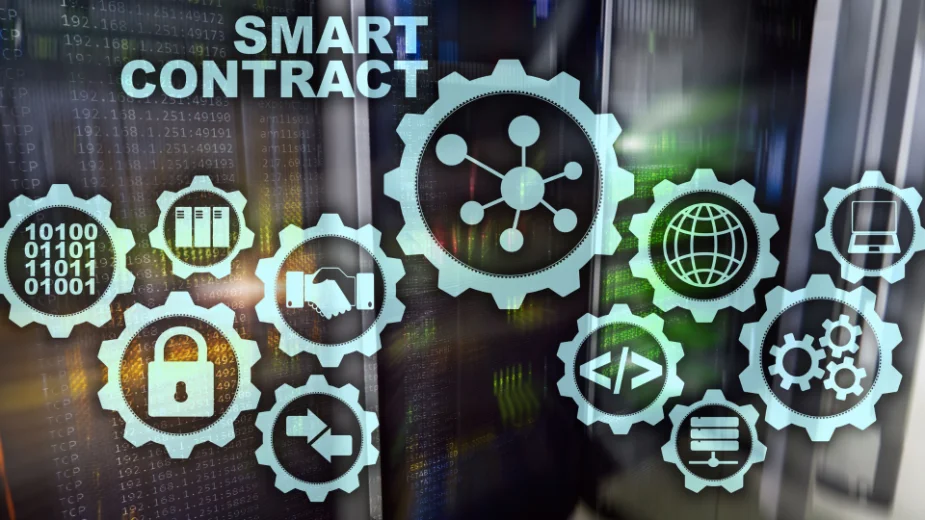
Smart contracts automate business processes, reduce dependence on intermediaries, and ensure that every outcome is transparently recorded on the blockchain. Once predefined conditions are satisfied, the contract executes exactly according to its programmed logic, providing the foundation for applications such as product traceability, digital certificates, and public services.
However, smart contracts are not a universal solution. The quality of a smart contract depends on both the quality of its source code and the accuracy of its input data. If an oracle provides incorrect data, the smart contract will still execute according to that information. Likewise, programming errors can introduce security vulnerabilities if contracts are not thoroughly tested and audited before deployment.
In addition, blockchain immutability is both a strength and a challenge. Once deployed, a smart contract is difficult to modify. For this reason, careful design, comprehensive testing, and rigorous security auditing are essential requirements for systems operating on a national blockchain.
6. Smart contracts and the future of trust automation
Smart contracts transform agreements from paper documents and trust in human intermediaries into self-executing logic and trust in transparent code.
On a national infrastructure such as NDAChain, this technology does not replace the legal system, it complements it by automating standardized processes while allowing people to focus on decisions that require judgment.
As more traceability processes, digital certificate issuance, and public services become digitized, smart contracts will quietly become the engine powering a transparent digital economy.
🔑 Read more: National blockchain and AI: Two pillars of Vietnam's digital infrastructure in 2026
Frequently asked questions (FAQ)
How do smart contracts work?
A smart contract operates through four main steps: programming the contract logic as code, deploying it to the blockchain, triggering it through transactions or input data, and automatically executing it once the predefined conditions are met. The execution results are recorded on the blockchain ledger, making them verifiable and highly resistant to unauthorized modification.
Do smart contracts require human signatures?
Smart contracts do not require people to sign each execution in the same way as traditional paper contracts. Once deployed, they automatically execute whenever the triggering conditions are satisfied. However, the participating parties must first agree on the business logic before it is encoded, and digital signatures may still be used to verify identities or authorize input transactions.
Does NDAChain support smart contracts?
Yes. NDAChain, Vietnam's national blockchain, supports an EVM-compatible Smart Contracts layer, allowing developers to build applications using Solidity and familiar development tools. Smart contracts on NDAChain are well suited for applications such as product traceability, digital certificate issuance, data verification, digital asset management, and public service automation.
What are some real-world examples of smart contracts?
One common example is product traceability. Each time a shipment is scanned at a farm, warehouse, or port, a smart contract automatically updates its status. Once all predefined requirements are met, the system can automatically issue a digital certificate. Other examples include issuing tamper-resistant digital diplomas, automatically updating administrative records, and triggering workflow steps in digital public services.
Are smart contracts completely secure?
No system can guarantee absolute security. Although smart contracts are transparent and resistant to unauthorized modification, they still depend on the quality of their source code and the accuracy of data provided by oracles. If the input data is incorrect or the code contains vulnerabilities, execution results may also be incorrect. Therefore, smart contracts should always undergo comprehensive testing, security auditing, and careful design before being deployed on a blockchain.