1. UNDP Blockchain Advisory Group: blockchain becomes part of Digital Public Infrastructure
On June 3, 2026, at the Proof of Talk 2026 event in Paris, the United Nations Development Programme (UNDP) announced the establishment of the Blockchain Advisory Group (BAG) with the participation of 26 major blockchain organizations including the Ethereum Foundation, Cardano Foundation, Algorand Foundation, Stellar Development Foundation, Avalanche, Web3 Foundation, and Filecoin Foundation. The inaugural session was chaired by UNDP Deputy Administrator Haoliang Xu, focusing on finance and digital financial infrastructure.
Notably, the Blockchain Advisory Group was established within the Digital Public Infrastructure (DPI) framework rather than as a standalone technology program. This reflects UNDP's new approach, treating blockchain as a component of digital infrastructure alongside digital identity, digital payments, and data sharing. This is also the direction being promoted by the World Bank and the G20 through Digital Public Infrastructure development programs globally.
For Vietnam, this trend shows that national blockchain is not merely a technology platform, but is becoming a component of national digital infrastructure. The development of NDAChain in the direction of serving identity, verification, and data sharing aligns with the approach that international organizations are promoting within the Digital Public Infrastructure ecosystem.
🔑 Read more: What is Blockchain? Its Evolution and Role in National Digital Strategy
2. Digital Public Infrastructure: why has the world converged on the "three pillars + trust" framework?

2.1. The Digital Public Infrastructure (DPI) framework
Digital Public Infrastructure (DPI) is a set of shared digital infrastructure with interoperability and public benefit orientation. According to the World Bank, a DPI ecosystem is typically built on three core pillars:
Digital ID: Verifying the identity of citizens and organizations.
Digital Payments: Enabling fast, secure, and low-cost electronic transactions.
Data Exchange: Connecting, exchanging, and verifying data between agencies, enterprises, and citizens.
These three infrastructure layers only deliver their full value when interoperability is ensured — allowing systems to connect and share data securely both nationally and across borders.
One of the most notable Digital Public Infrastructure models is India Stack, comprising Aadhaar (digital identity), UPI (digital payments), and DigiLocker (digital document sharing). According to the IMF, the UPI system alone processed approximately 21.7 billion transactions equivalent to 28.3 trillion rupees in January 2026. By February 2026, the Indian Government had signed 24 cooperation memoranda to share its DPI model with multiple countries, while also deploying the open-source MOSIP identity platform across 25 countries in Asia and Africa.
These results show that Digital Public Infrastructure is no longer an initiative of individual countries, but is becoming a shared reference framework for building digital government, the digital economy, and digital society globally. In this picture, national blockchain is increasingly seen as the trust infrastructure layer, supplementing the three DPI pillars with verification capability, data integrity assurance, and enhanced verifiability.
2.2. Why has "trust" become the fourth layer of DPI?
The traditional Digital Public Infrastructure (DPI) model is typically built on three pillars: digital identity, digital payments, and data sharing. However, as AI agents, deepfakes, identity fraud, and cross-border scams increase, these three technical layers are no longer sufficient to ensure the security of digital transactions at national scale.
This is why the digital trust layer is increasingly becoming an essential component of DPI. This layer does not replace identity, payments, or data sharing, it runs across all three to ensure that data and transactions can be verified, traced, tamper-proofed, and non-repudiable.
🔑 Read more: Building Digital Trust: The Foundation for a Prosperous Vietnam
In this context, national blockchain plays the role of trust infrastructure for DPI, helping countries ensure data sovereignty, increase verifiability, and reduce dependence on external authentication platforms. With platforms like NDAChain, blockchain can become the trusted verification layer for digital identity, public data, and digital services in the AI era.
3. Where does Vietnam stand on the global DPI map?
3.1. The three Digital Public Infrastructure pillars are gradually taking shape
Mapped against the World Bank's Digital Public Infrastructure (DPI) framework, Vietnam is progressively forming three digital infrastructure pillars at national scale:
Digital identity: The VNeID ecosystem and chip-embedded citizen ID cards are being widely deployed, supporting electronic authentication for many public and digital services. In the field of decentralized identity, the did:nda method has been registered in the W3C DID Registry, creating the foundation for connection with the international identity ecosystem.
Digital payments: Electronic payment infrastructure is developing with NAPAS, VietQR, and cross-border payment connections within the ASEAN region, contributing to the promotion of digital transactions between citizens, enterprises, and government agencies.
Data sharing: The National Data Center along with specialized databases are being connected in line with the direction of building shared data infrastructure, creating the foundation for data sharing and utilization between agencies.
As these three pillars gradually take shape, the need for a trust layer to verify data, ensure integrity, and increase verifiability becomes increasingly important. This is the role that national blockchain is moving toward in Vietnam's DPI architecture.
3.2. NDAChain and its Trust Layer role in Vietnam's DPI
Within the Digital Public Infrastructure ecosystem, NDAChain is being developed as the national blockchain layer (Trust Layer), adding verification, traceability, and integrity assurance capability to identity, data, and digital service systems.
NDAChain operates as a permissioned Layer 1 model, using the PoA-qBFT consensus mechanism with a network of 49 public-private validators, aiming to meet requirements for performance, governance, and accountability for national data infrastructure.
🔑 Read more: What is PoA-qBFT? The consensus mechanism of NDAChain Layer 1 blockchain
In the DPI architecture, NDAChain delivers three core capabilities:
Ensuring data sovereignty: Infrastructure deployed and governed domestically, meeting requirements for data governance and personal data protection.
International standards compatibility: Supporting W3C DID/VC standards, ready to connect with international digital identity ecosystems and Digital Public Infrastructure.
Data verification and traceability: Providing a trust layer enabling data, digital credentials, and transactions to be verified, tamper-proofed, and non-repudiable.
This approach aligns with the international trend, as blockchain is increasingly seen as a complementary infrastructure layer for Digital Public Infrastructure, alongside the three traditional pillars of digital identity, digital payments, and data sharing.
4. Four DPI applications where NDAChain creates national value in 2026

4.1. Data infrastructure for the two-tier local government
From July 1, 2025, the two-tier local government model officially began operating across 34 provinces and cities and 3,321 communes, wards, and special zones, the largest administrative restructuring since Đổi Mới. After a year of operation, the clearest challenge is the interoperability of shared data between the commune and provincial levels now that the district level no longer exists.
NDAChain plays the role of a ledger anchoring the status of administrative records: each time a procedure is processed at the commune or provincial level, a proof hash is recorded on the national blockchain. When citizens transfer data between localities or file complaints, the verifiable chain of evidence is permanently stored, independent of where the physical data resides. This is how Vietnam's DPI increases transparency without disrupting the existing data architecture.
4.2. Self-sovereign identity and cross-border interoperability
Leading in Southeast Asia, NDAChain's did:nda method has been registered in the global W3C DID Registry, helping establish a "digital passport" for Vietnamese data to be verified and interoperated globally. Within the GOE Alliance framework and the On-chain Finance Network (OFN) initiative, the first Vietnam–Indonesia cross-border on-chain identity verification transaction was successfully completed, demonstrating the potential of national blockchain in connecting regional and global DPI ecosystems.
🔑 Read more: NDAChain and GOE Alliance Realize the First Cross-Border On-chain Transaction in Southeast Asia
4.3. Traceability for strategic exports
NDATrace, the product and goods identification, authentication, and traceability platform built and operated on NDAChain, extends the data layer of Digital Public Infrastructure into the supply chain domain. As the EU applies Digital Product Passport and EUDR requirements, Vietnamese goods need a "digital data passport" that can be verified, traced, and cross-checked. NDAChain serves as the national blockchain's verification layer, supporting strategic export sectors such as coffee, timber, and rubber in meeting international data transparency requirements.
4.4. Digital trust for AI agents and the agent economy
Decision 21/2026/QĐ-TTg places both AI and blockchain among the national strategic technology groups from July 1, 2026. In this context, NDAChain can provide Verifiable Credentials for AI agents, giving each AI agent a verifiable identity, activity history, and authorization scope. This is the next-generation digital trust layer of DPI, serving the agent economy and automated digital services of the future.
5. From "DPI user" to "DPI contributor": Vietnam's strategic positioning
In the next-generation Digital Public Infrastructure (DPI) framework, themes such as digital governance, public trust, legal identity, climate transparency, financial inclusion, and the future of digital labor are becoming global priorities. These are also the areas Vietnam is progressively deploying through the two-tier local government, national data infrastructure, carbon credits on blockchain, and identity for AI agents.
With the foundation already in place, Vietnam has the opportunity to transition from a DPI-adopting country to a DPI model-contributing country for ASEAN and the Global South. This transition is supported by three important conditions: a maturing legal framework for data and digital technology. including NDAChain national blockchain, along with international cooperation networks such as GOE Alliance, ASEAN DEFA, Vietnam–Indonesia cooperation, and the W3C DID Registry.
From integration to ownership, NDAChain helps Vietnam position itself on the global DPI map not merely as a country receiving digital infrastructure, but as one capable of contributing a Trust Layer to the region.
6. NDAChain - Vietnam's digital trust layer on the global DPI map
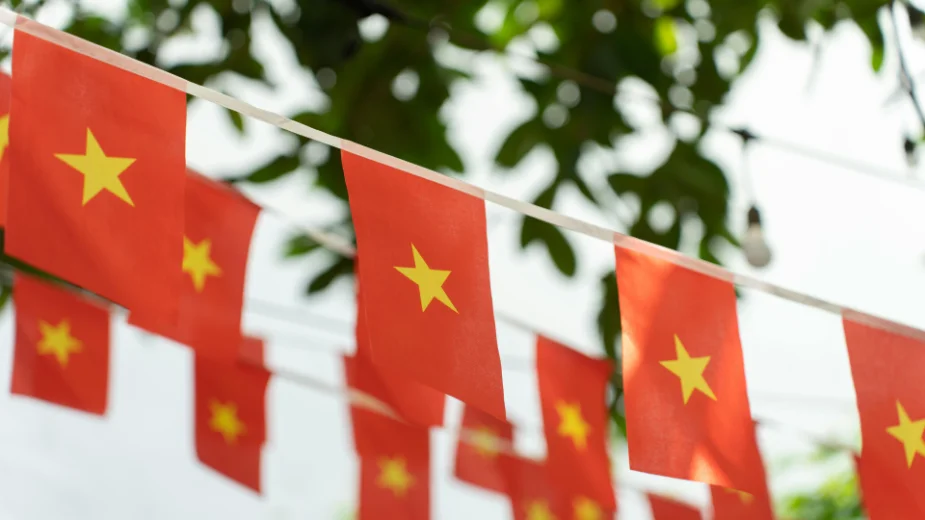
The establishment of the UNDP Blockchain Advisory Group and the World Bank's Global DPI Program shows that Digital Public Infrastructure (DPI) is becoming an important digital infrastructure framework for nations. With the pillars of digital identity, digital payments, data sharing, and NDAChain national blockchain serving as the trust layer, Vietnam has the basis to build a DPI + Trust Layer model serving digital government, the digital economy, and digital society. In a context where countries must balance technology integration with strategic autonomy, NDAChain is the platform that enables Vietnam to own its authentication, data, and digital trust infrastructure. Learn more at ndachain.vn.