The On-chain Economy: From Concept to Execution
As the global digital economy shifts toward digital assets and on-chain transactions, a major question remains: can nations build a blockchain ecosystem that is both legally compliant and cross-border interoperable?
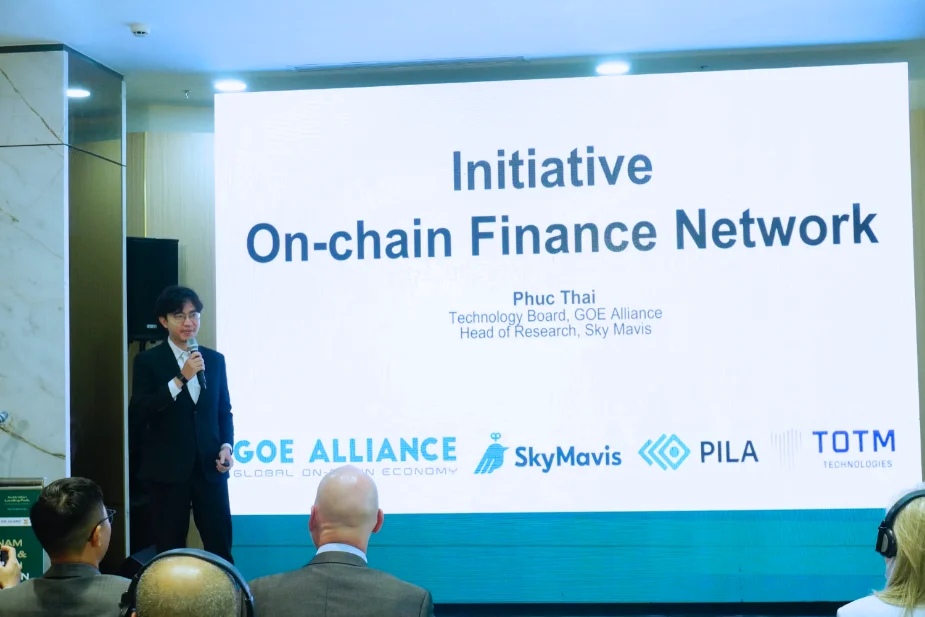
At the Vietnam FinTech & RegTech Immersion Program 2026 in Ho Chi Minh City, the first answer was established. The On-chain Finance Network (OFN) initiative, announced by the GOE Alliance, successfully demonstrated a cross-border on-chain transaction between a Vietnamese citizen and an Indonesian citizen. Both parties were fully KYC-verified, and the transaction was completed successfully without disclosing any raw personal data or duplicating the verification process.
This milestone proves that building a compliant, secure, and interoperable on-chain economy between sovereign jurisdictions is technically achievable. Conducted under the collaboration of GOE Alliance, PILA, Sky Mavis, and TOTM Technologies, this demonstration lays the foundation for interconnecting multi-national identity systems in the future.
While OFN remains an exploratory technology initiative and is not yet a deployed network, this milestone is pivotal: it proves the technical feasibility of the cross-border compliance layer, the missing piece for blockchain to operate at national and global scales.
Blockchain as the Solution for Cross-Border Compliance
Blockchain has long been expected to enable frictionless and borderless capital flows. However, at the national and institutional levels, the greatest barrier is not technology, but the lack of a standardized and interoperable cross-border compliance layer.
Currently, when a Vietnamese business transacts on-chain with international partners, KYC/KYB processes completed under domestic regulations are not mutually recognized across borders. This leads to duplicated compliance costs, increased legal risks, and interrupted capital flows, even though blockchain can technically process transactions in milliseconds.
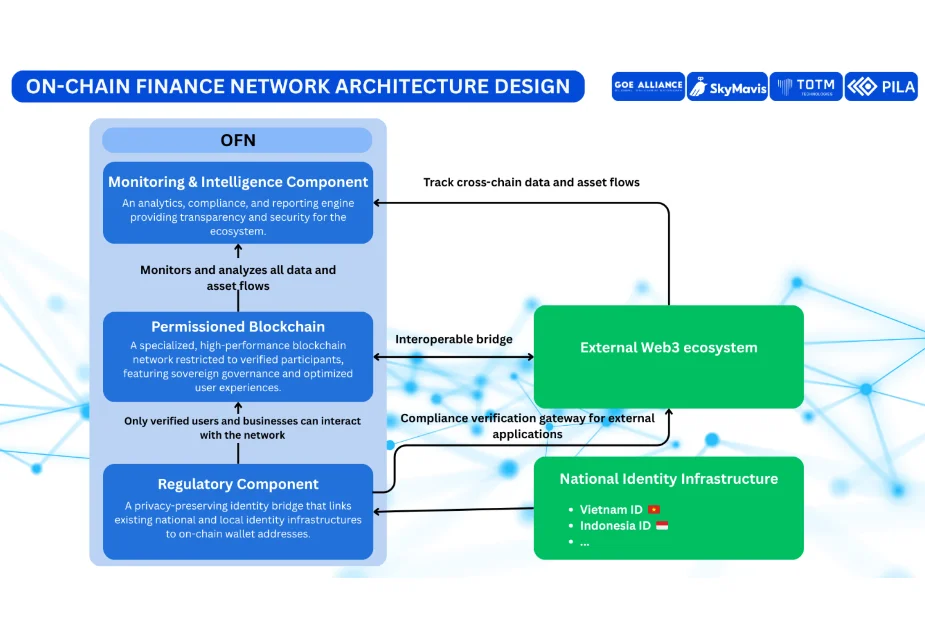
As a national trusted data infrastructure, NDAChain addresses this problem directly by building an interoperable identity and authentication layer. On the NDAChain platform, Verifiable Credentials (VC) are standardized and can be recognized between systems without transferring any raw personal data across borders.
This approach enables:
Efficiency: Businesses verify once and can reuse credentials across multiple transactions.
Governance: Regulators retain full visibility and ensure compliance.
Optimization: Compliance costs are incurred once, not twice.
NDAChain is therefore more than a technology platform; it is a digital trust infrastructure that connects data, standardizes authentication, and unlocks cross-border on-chain transactions at national and international scales.
A $16 Trillion Opportunity and the Core Role of NDAChain
Leading global institutions, including the Bank for International Settlements (BIS) and the World Economic Forum (WEF), project that by 2030, approximately 10% of global GDP, roughly $16 trillion, will be tokenized and operate on-chain.
Large-scale asset tokenization programs like Project Guardian (MAS), alongside the wave of stablecoin legislation in the US, EU, Japan, and Southeast Asia, signal a structural long-term transition. However, a central problem remains: how can sovereign regulatory systems with different identity standards interoperate in a borderless digital asset economy?
NDAChain is a strategic partner of the On-chain Finance Network (OFN) in answering that question. When fully realized, OFN will allow institutional capital to move on-chain across borders at scale, combining the efficiency of DeFi with the legal certainty of traditional finance.
Realizing the Vietnam-Indonesia Digital Economy Corridor
Vietnam and Indonesia are the ideal testbeds for blockchain transaction authentication. In 2025, bilateral trade reached $17.2 billion, nearly double the $8 billion in 2020. However, most flows still clear through correspondent banking chains costing over 6% per transaction and taking days to settle.

Meanwhile, both economies are digitizing rapidly:
Vietnam’s digital economy is projected to reach $90–$200 billion by 2030 (CAGR of 19%).
Indonesia’s digital economy is forecast to reach $220–$360 billion in the same period.
OFN targets the gap where high-growth digital economies collide with compliance infrastructure that has not kept pace. By enabling a verified Vietnamese business to transact on-chain with an Indonesian counterpart, via TOTM’s national biometric ID system, without duplicating KYC/KYB or transferring raw data, OFN converts a $17 billion trade relationship into a live testbed for a $500+ billion digital economy corridor by 2030.
For a Shared Goal
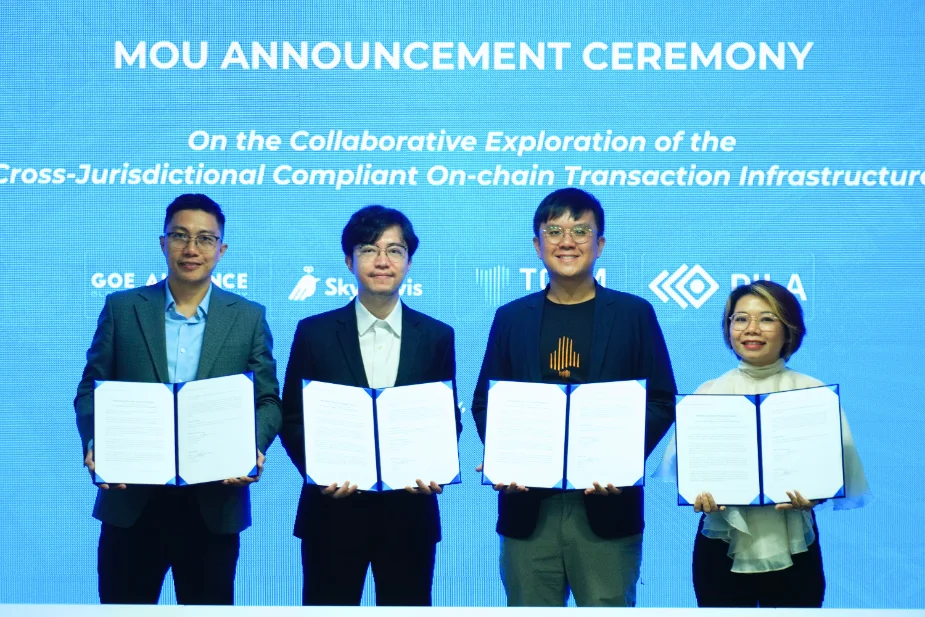
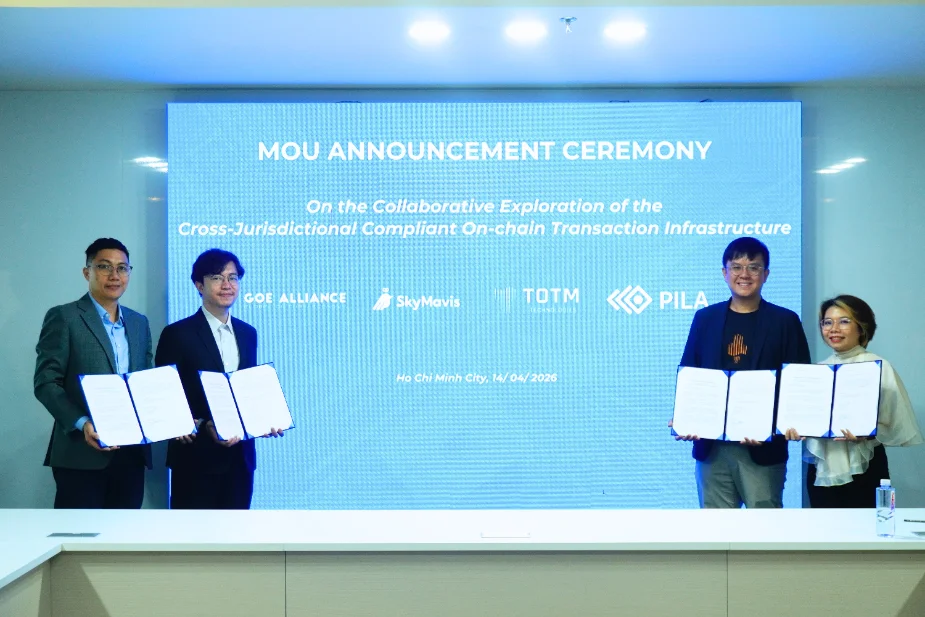
To formalize the exploration, GOE Alliance, PILA, Sky Mavis, and TOTM Technologies executed a Memorandum of Understanding (MOU) for the Collaborative Exploration of Cross-Jurisdictional Compliant On-chain Transaction Infrastructure. Each party contributes a strategic capability:
GOE Alliance: Initiating Party and project coordinator, ensuring alignment with global compliance and the VIFC-HCMC policy environment.
PILA: Deploys self-sovereign identity management solutions for Vietnamese participants, supporting the issuance and verification of on-chain credentials.
Sky Mavis: Contributes blockchain infrastructure expertise for the technical architecture of compliant transactions.
TOTM Technologies: Contributes multimodal biometric national ID systems for Indonesian KYC/KYB authentication.
“This strategic event confirms that NDAChain not only meets international standards but is also capable of global interoperability in practical scenarios. This is a shift from integration to mastery, as Vietnam proactively creates trusted data infrastructure to serve as the foundation for digital sovereignty and sustainable national development,” said Mr. Nguyen Phu Dung, CEO of PILA.
VIFC-HCMC: The Right Environment at the Right Time
The OFN initiative would not be possible without the institutional foundation of VIFC-HCMC. Established under National Assembly Resolution No. 222/2025/QH15 and operationalized in February 2026, VIFC-HCMC offers a dedicated regulatory sandbox for blockchain and digital assets, a legally permissive yet rigorously governed environment.
Vietnam’s proactive development of VIFC-HCMC demonstrates a clear strategic posture: blockchain is a strategic technology pillar. This is the bedrock for forming a trusted data ecosystem where NDAChain can fulfill its role in connecting and authenticating the entire digital economy.
About PILA
PILA is a member of Vietnam's National Data Association and the architect of the NDAChain - Vietnam’s blockchain platform and NDAKey - Vietnam’s Self-Sovereign identity Solution. PILA is a pioneer in deploying decentralized identity and data authentication platforms, aiming to build a trusted data infrastructure for Vietnam.