What is the EU Digital Product Passport (DPP)?
Overview
The Digital Product Passport (DPP) is a digital record that stores key information about a product, including its origin, composition, manufacturing process, and entire lifecycle. It was introduced by the European Union under the Ecodesign for Sustainable Products Regulation (ESPR) to create a transparent data system for supply chains and support the circular economy.
Unlike traditional traceability systems, which capture fragmented data at individual stages, DPP aims to build a continuous and unified dataset for each product, from raw material extraction and production to distribution, use, repair, recycling, or reuse.
Each product is assigned a unique digital identity, enabling stakeholders across the supply chain, regulators, and consumers to access information via technologies such as QR codes, NFC chips, or RFID.
Implementation Context
According to the European Commission, DPP will be rolled out progressively throughout this decade. Starting from 2026, key industries such as electric vehicle batteries, textiles, and electronics are expected to adopt DPP to standardize product data across their lifecycle.
A 2023 report by the European Commission highlights that DPP can:
Improve product traceability across supply chains
Support repair, reuse, and recycling models
Reduce industrial waste and carbon emissions
DPP is also a critical component of the EU’s goal to achieve net-zero emissions by 2050.
Case study: EU Battery Passport
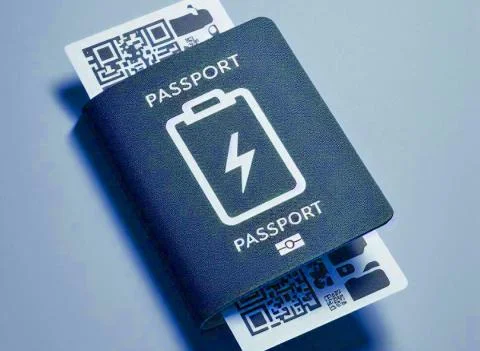
A prominent example of DPP is the Battery Passport for electric vehicle batteries. Under new EU regulations, from 2027, EV batteries sold in Europe must include a digital record containing:
Raw material sources (lithium, cobalt, nickel)
Battery production data
Carbon footprint
Lifecycle and recyclability information
This data can be accessed through QR codes or other digital identifiers attached directly to the battery, enabling transparent and verifiable lifecycle tracking.
Real-World Impact
In practice, the Digital Product Passport delivers several key benefits:
Product transparency: Consumers can verify origin and environmental data before purchasing
Lifecycle management: Businesses can track repair, reuse, and recycling processes
Data standardization: Enables seamless data sharing across organizations and regulators
Anti-counterfeiting: Product information can be independently verified
By connecting data across the entire product lifecycle, DPP is becoming a foundational data layer for transparent supply chains and the circular economy.
Why is blockchain considered a suitable technology for the Digital Product Passport?
Challenges of traditional traceability systems
In today’s supply chains, product data is often stored across multiple isolated systems operated by different organizations, such as ERP systems, warehouse management systems, logistics platforms, or supplier databases. The lack of a unified data-sharing mechanism leads to fragmented product lifecycle information.
According to the European Commission (2023), an average industrial product in Europe may pass through 10–15 companies within the supply chain before reaching the end consumer. In many cases, each company holds only a portion of the product data, making it difficult to trace the complete lifecycle.
The textile industry is a typical example. A study by the European Environment Agency shows that a garment sold in the EU may go through 6–8 production stages across multiple countries, including fiber production, weaving, dyeing, sewing, and distribution. Without connected data, verifying raw material origins or production conditions becomes nearly impossible in a timely manner.
Beyond data fragmentation, traditional traceability systems also face data integrity risks. When data is stored in centralized databases owned by individual organizations, information can be modified or altered without any independent verification mechanism.
A commonly cited example is the 2013 horse meat scandal in Europe, where products labeled as beef were found to contain horse meat. Tracing the origin of these products took more than two weeks due to fragmented supply chain data across multiple systems.
These limitations highlight that traditional traceability systems struggle to support global, multi-party supply chains, a challenge that the Digital Product Passport aims to address.
What problems does blockchain solve?
.webp)
Blockchain is considered a technology that can significantly enhance the transparency and verifiability of traceability data.
First, blockchain leverages data immutability. Once information is recorded on the blockchain, any modification leaves a trace and requires network consensus. This helps reduce the risk of data manipulation within the supply chain.
Second, blockchain enables multi-party access and verification from a shared data source. This is especially important in supply chains involving multiple stakeholders.
A real-world example is IBM Food Trust, used by major European retailers such as Carrefour. Before adopting blockchain, tracing the origin of a food product could take 6–7 days. With blockchain implementation, this process can be reduced to just a few seconds.
In addition, blockchain supports product origin verification. As each step in the supply chain is recorded on the blockchain, consumers can verify product information through QR codes or digital identities.
Several European fashion brands, such as Arianee and the LVMH Aura Blockchain Consortium, have experimented with blockchain to assign digital identities to luxury products, allowing consumers to verify product origin and ownership history.
As the EU develops a large-scale product data system for the circular economy, blockchain is increasingly seen as a key technology for building a trusted data infrastructure for future supply chains.
Vietnam’s National Blockchain and the Need for a Unified Traceability Platform in Vietnam
The trend of implementing Digital Product Passports (DPP) in Europe indicates a global shift from fragmented data silos to shared data infrastructures for supply chains. In this model, data serves not only enterprises but also acts as a regulatory tool for authorities and a transparency foundation for consumers to verify product origins.
In Vietnam, the demand for robust traceability systems is surging, particularly in key export sectors such as agriculture, fisheries, textiles, and processed foods. According to the Ministry of Agriculture and Rural Development, Vietnam’s agricultural exports reached approximately $53 billion in 2023. Major markets, including the EU, US, and Japan, are imposing increasingly stringent requirements on supply chain transparency and traceability.
Currently, many traceability systems in Vietnam remain fragmented, operating independently across different provinces, businesses, or industries. This fragmentation makes data synchronization and nationwide verification extremely difficult.
In this context, developing a unified traceability platform based on National Blockchain Infrastructure is a high-potential strategic approach. Blockchain acts as a decentralized data layer where all stakeholders, from manufacturers and distributors to regulators, can record and verify product information securely.
A unified traceability platform can help:
Standardize product data across the industry.
Bridge the data gap between enterprises and government authorities.
Support businesses in meeting strict international market requirements.
Establish a foundation for future models like the Digital Product Passport (DPP).
In an era where digital economy and global trade are increasingly data-driven, developing national blockchain infrastructure and shared traceability platforms is a vital step. This will enhance supply chain transparency and significantly boost the competitive advantage of Vietnamese goods in the international arena.
The Imperative for a Unified Traceability Platform in Vietnam
The implementation of Digital Product Passports (DPP) in Europe signals a paradigm shift: product data is moving away from isolated company silos toward a shared data infrastructure. This model enables all stakeholders, from manufacturers and distributors to regulators and consumers, to access and verify product information on a single, unified platform.
In Vietnam, the demand for such systems is skyrocketing, particularly in high-stakes export sectors like agriculture, fisheries, food processing, and textiles. According to the Ministry of Agriculture and Rural Development, Vietnam’s agri-forestry-fishery exports reached $53.01 billion in 2023. However, major markets like the EU, US, and Japan are tightening their grip on supply chain transparency and traceability requirements.
Despite the growing need, many traceability systems in Vietnam remain fragmented, implemented locally or within individual enterprises. This lack of a common standard creates significant "data islands," making it difficult to synchronize information and posing a major hurdle for businesses proving product origin to international auditors.
Establishing a national-scale unified traceability platform is no longer an option but a necessity. Such a foundation will:
Standardize product data to meet global compliance.
Enhance verification capabilities through a "single source of truth."
Empower businesses to seamlessly adapt to the evolving standards of global trade.
By bridging the gap between local production and international requirements, a unified platform will be the catalyst for Vietnam's sustainable export growth.
NDATrace: A Unified Traceability Platform Built on NDAChain

In response to global transparency trends, advanced technological platforms are being developed to establish traceability systems based on "trusted data" infrastructures. A prime example is NDATrace – a comprehensive platform for identity, authentication, and product traceability.
Powered by Decentralized Identity (DID)
By leveraging Decentralized Identity (DID) on the NDAChain blockchain, every product is assigned a Unique Identifier (UID). This enables transparent tracking of the entire product lifecycle, from production, import, and inspection to transportation, distribution, and final consumption. Every authentication action by stakeholders across the supply chain is recorded with absolute integrity, tamper-proof and unalterable.
Strategic Values for Vietnam's Data Ecosystem
A unified traceability platform like NDATrace delivers immense value to the national product data landscape:
Data Standardization: Aligning traceability data between enterprises and regulatory bodies.
Ecosystem Connectivity: Seamlessly linking supply chain data across multiple stakeholders.
Global Compliance: Empowering businesses to meet the stringent traceability requirements of international markets.
Future-Ready Infrastructure: Serving as the foundation for advanced data models like the Digital Product Passport (DPP).
In an era where international trade increasingly depends on supply chain transparency, blockchain-based platforms like NDAChain are becoming vital tools. They not only ensure data integrity but also significantly enhance the global competitive advantage of Vietnamese enterprises.
Digitalizing Supply Chains with DPP: A Strategic Move for Vietnamese Enterprises
The Digital Product Passport (DPP) is rapidly becoming the new data standard for product lifecycle management and supply chain transparency across global markets, particularly in Europe. By creating a digital profile for every item, the DPP enables stakeholders to access and verify information regarding origin, production, and recycling with unprecedented clarity.
In this ecosystem, Blockchain is recognized as the most vital technology to support the recording and authentication of traceability data among multiple parties. For Vietnam, developing shared traceability platforms like NDATrace on the NDAChain blockchain infrastructure provides a critical advantage:
Standardizing product data according to international norms.
Empowering businesses to meet the stringent transparency requirements of global markets.
Ensuring data integrity that is tamper-proof and verifiable at every stage.
As "transparency" becomes a non-negotiable requirement for international trade, adopting blockchain-driven solutions like NDAChain is not just about compliance, it is about enhancing the global competitive edge of Vietnamese products.
👉 Discover more about NDAChain – The blockchain infrastructure powering data identity and product traceability.