Vietnam’s national blockchain: A new pillar of digital sovereignty
No longer an experimental technology, blockchain is being deployed by advanced nations such as Estonia, South Korea, Singapore, and the UAE as a foundational layer for e-government, digital identity, healthcare, and supply chain management. Estonia, a leading model of digital governance, has applied blockchain since 2008 to ensure the integrity of citizen data.
Singapore uses distributed ledger technology within its national digital identity platform, SingPass, enabling citizens to access more than 2,000 public services online securely. These examples demonstrate that owning a national blockchain is not merely a technological choice but a strategic move toward digital sovereignty.
Digital identity: Empowering citizens with control over their data
In the physical world, individuals possess identity cards, diplomas, and medical records. Yet in the digital environment, users often lose control over their identities. Personal data is collected, leaked, or misused, and citizens can be impersonated in loan applications, service registrations, and online scams.

Decentralized identity (DID) offers a powerful solution. Unlike traditional identity systems where data is centrally stored on vulnerable servers, DID returns control of information to the user. Through a digital identity wallet, citizens can store, verify, and selectively share necessary data attributes using technologies such as zero-knowledge proof. All of this is protected on blockchain infrastructure, ensuring immutability and resistance to tampering or forgery.
🔑 Read more: Self-Sovereign Identity: Building Trust for Online Transactions
Blockchain as a transparent infrastructure backbone
Blockchain is known for its immutability, transparency, and distributed verification. These characteristics position it as the data backbone for critical sectors. In food, pharmaceuticals, and health products, where businesses frequently confront counterfeit goods, NDAChain enables origin authentication and full lifecycle tracking from producer to consumer.
For manufacturing and logistics enterprises, integrating NDAChain into supply chain management automates verification, reconciliation, and document authentication related to transportation, distribution, and inventory. This reduces operational costs while increasing trust among domestic and international partners.
In sectors such as education, finance, and insurance, NDAChain supports secure verification of records, contracts, and customer identities, reducing fraud and improving digital user experiences.
🔑 Read more: NDAChain the trusted data backbone for Vietnamese enterprises
NDAChain: Vietnam’s layer 1 blockchain infrastructure
Unlike commercial blockchain solutions, NDAChain is positioned as a core component of Vietnam’s national data architecture. With four comprehensive security layers, including network infrastructure performance of 1,200 to 3,600 transactions per second, encrypted and immutable data storage, open APIs, and zero-knowledge proof security mechanisms, NDAChain ensures reliable authentication, data protection, and global compatibility.
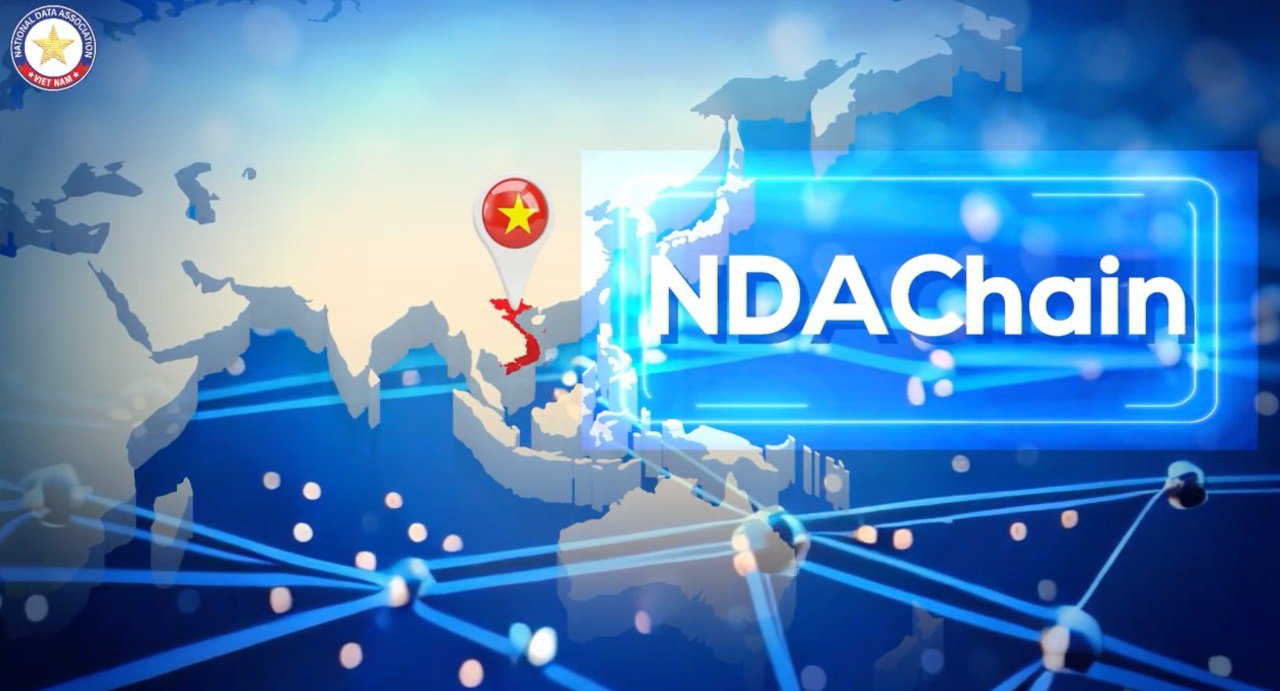
NDAChain integrates essential infrastructure components such as NDADID for decentralized identity, NDAKey for self-sovereign identity management, and NDATrace for product identification, authentication, and traceability. Together, these elements form the foundation of a transparent data ecosystem in which citizens, businesses, and government entities share information through a sovereign public verification layer.
🔑 Read more: Why is Vietnam building a national blockchain platform?
A strategic step in national digital architecture
NDAChain is not merely a technological platform but a strategic pillar within Vietnam’s broader digital government architecture. By operating at layer 1, NDAChain connects systems across industries, sectors, and localities, forming the foundation for next-generation digital applications, from identity authentication and medical data sharing to electronic diplomas and smart financial contracts.

Investing in NDAChain reflects a long-term vision: transitioning from isolated application development to building an open, neutral infrastructure that enables thousands of digital services to operate on a trusted and interoperable foundation. This approach empowers Vietnam to shape its digital future proactively, ensuring data sovereignty, strengthening cybersecurity, and safeguarding national digital trust.
.webp)





.png?s=fpt)

