Decentralized identity as a global standard
Globally, decentralized identity is emerging as a new standard. Instead of allowing a central authority to control all identity data, DID enables individuals to own and control their own identities using blockchain technology.

A DID system typically includes three main roles:
Issuer: The entity that issues verifiable credentials, such as a university granting a diploma.
Holder: The individual who owns and stores the issued credentials and decides when to share them.
Verifier: The organization that needs to verify the information, such as an employer validating a degree.
🔑 Read more: Blockchain and decentralized identity: A new trust infrastructure for a secure and transparent digital society
The DID model operates without requiring a direct connection between the issuer and the verifier. The user remains at the center and decides what information to share, with whom, and at what time. Sensitive personal data is stored in a private digital wallet, while public data such as public keys and decentralized identifiers are recorded on a blockchain. This architecture enhances privacy, security, and flexibility while maintaining transparent and tamper-proof verification.
Around the world, governments and organizations are accelerating the deployment of decentralized identity ecosystems:
Europe has adopted eIDAS 2.0 in April 2024, laying the foundation for the European Digital Identity framework and requiring member states to deploy digital identity wallets by 2026. The EU is funding large-scale decentralized identity projects across multiple sectors and countries.
China launched RealDID in December 2023, a national blockchain-based identity system aimed at verifying the identities of 1.4 billion citizens. Since August 2024, RealDID has also been implemented in Hong Kong to support identity verification and secure financial transactions.
Asia Pacific countries such as Thailand, the Philippines, and India are actively developing digital identity wallet frameworks. Japan has partnered with the EU on identity wallet implementation, and Australia has introduced new legislation and funding programs for digital identity.
The Middle East and North Africa region is planning widespread digital wallet adoption as part of national digital transformation strategies.
In the Americas, the United States is developing a national digital identity ecosystem through state-level initiatives, while Canada is among the early government pioneers in researching and implementing decentralized identity.
Vietnam deploying a national decentralized identity system

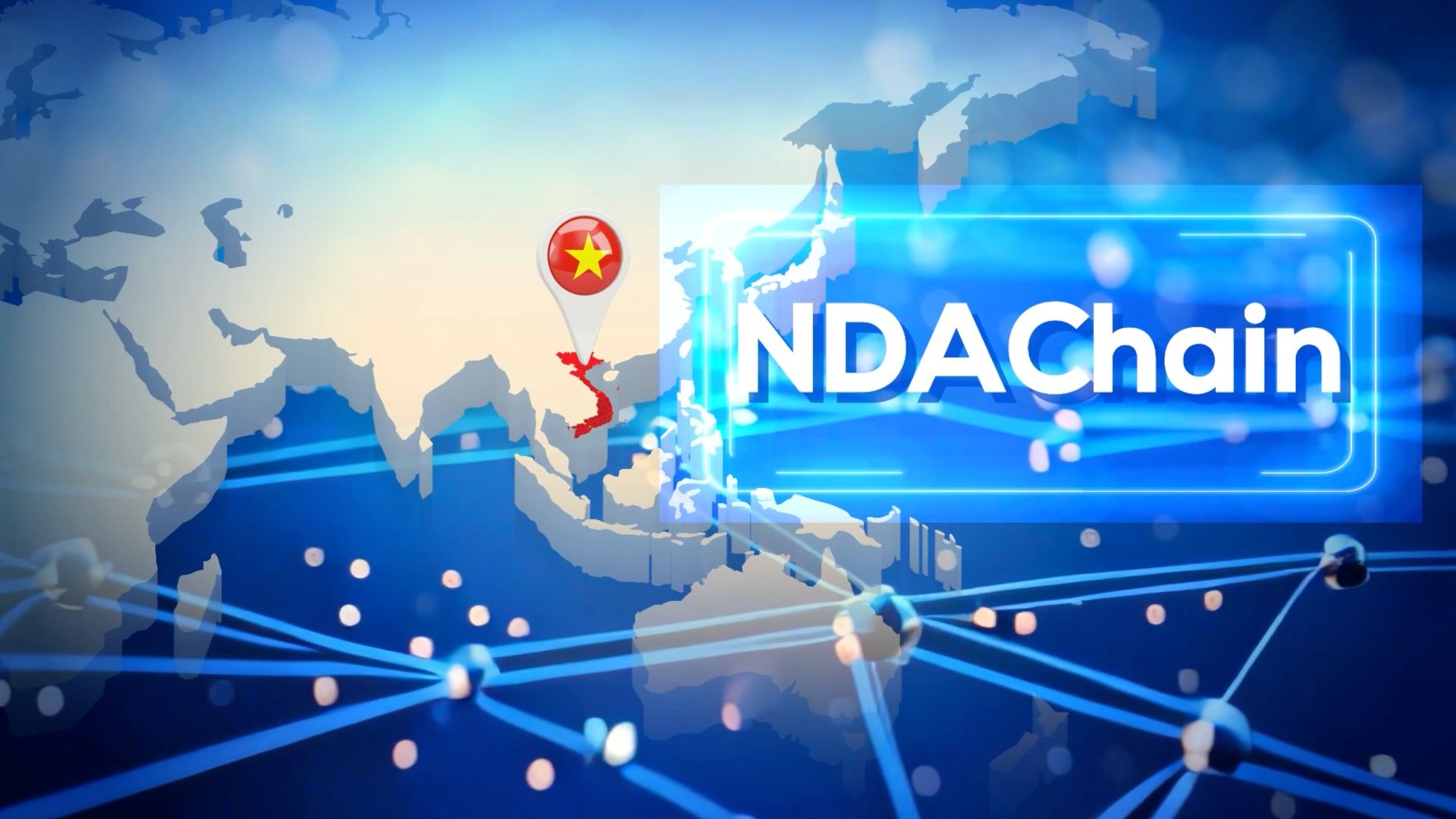
In Vietnam, the decentralized identity and authentication system known as NDADID has been officially introduced and developed on the public blockchain platform NDAChain. NDADID represents a strategic step toward building sovereign, secure, open, and user-centric digital infrastructure.
🔑 Read more: Why is Vietnam building a national blockchain platform?
NDADID allows any authorized issuer such as universities, banks, enterprises, or government agencies to create decentralized identifiers recorded on NDAChain. They can then issue verifiable credentials to users, including diplomas, licenses, medical records, contracts, and other documents.
Users store these credentials securely in their personal digital wallets. When verification is required, users generate and share a digital proof. The verifier can independently confirm the authenticity of the information through the blockchain without directly contacting the issuer.
How NDADID works?

A university issues you a digital certificate containing information about your degree. The certificate is signed using the university’s private key, and you store it in your personal wallet.
When applying for a job, you do not need to submit notarized paper copies. Instead, you generate a digital proof and send it to the employer.
The employer verifies the university’s digital signature through NDAChain to confirm the authenticity of your degree, without needing to contact the university directly.
🔑 Read more: What is W3C DID? Why does the Internet need a Decentralized Identifier Standard?
All interactions occur independently without complex system integrations. This ensures privacy, protects personal data, and reduces operational costs.
Toward a secure and sustainable digital economy
.jpg)
NDADID is part of Vietnam’s broader national digital infrastructure strategy, aiming to build a transparent, secure digital economy where citizens retain control over their own data. The system offers wide application potential across education, finance, healthcare, commerce, and public administration, supported by scalability, open standards, and global interoperability.
As identity becomes the digital passport of every citizen, decentralized identity will serve as the key to ensuring security, privacy, and trust in all digital interactions.

.webp)




.png?s=fpt)

