Context: Why does the supply chain need a new layer of trusted infrastructure?
Modern supply chains operate on a foundation of trust between many participants. Manufacturers, transporters, warehouses, customs authorities, distributors, and retailers each maintain their own dataset. When incidents occur, traceability depends on the ability to reconcile fragmented data across dozens of organizations.
The 2013 horsemeat scandal in the European Union is a textbook example. Horsemeat mislabeled as beef passed through multiple countries and intermediate suppliers. Tracing took more than two weeks because the data was scattered across disconnected systems. The damage to consumer trust lasted for many years afterward.
The core problem is not a lack of data. Data exists at every link in the chain, but a common infrastructure layer for authentication and sharing is missing. Each party can edit its own records without anyone noticing. This is precisely the gap that Layer 1 blockchain is designed to fill.
Limitations of traditional supply chain management systems
Current ERP (Enterprise Resource Planning) and SCM (Supply Chain Management) systems operate on a centralized model. Each enterprise uses its own software, its own database, and its own data standards. When end-to-end traceability is needed, these systems must be manually integrated via APIs or file exchange.
High integration costs, slow verification speeds, and the risk of data fraud at any point are three structural limitations. The World Economic Forum (WEF) and IBM estimate that blockchain can reduce supply chain operating costs by 20 to 40% by eliminating layers of verification intermediaries.
How does Layer 1 blockchain solve the supply chain problem?
Layer 1 blockchain provides a distributed ledger where every transaction is recorded immutably, transparent to authorized parties, and automatically verified through a consensus mechanism. In the supply chain context, this delivers three core values.
1. Real-time traceability
Every time goods change hands between parties from farm to processing plant, from origin warehouse to import port, the event is recorded on the blockchain. Data includes time, location, storage conditions, and related documentation. Anyone with access can verify a product's full history in just a few seconds.

2. Smart contracts automate processes
A Smart Contract is a self-executing program on the blockchain that runs when predefined conditions are met. In logistics, smart contracts can automatically execute payment when goods arrive at the correct location, trigger alerts when temperature exceeds thresholds, or issue certificates of origin once authentication documents are complete. Manual processes that took days are reduced to minutes.
3. Auditability and regulatory compliance
Data on Layer 1 blockchain has immutability, once recorded, it cannot be deleted or altered without leaving a trace. This characteristic is especially important for export markets with strict compliance requirements such as the EU, Japan, and the United States. Businesses can prove their entire production and shipping process with tamper-proof digital evidence.
International case studies: How blockchain has actually transformed supply chains
1. IBM Food Trust and Carrefour: From 7 days to a few seconds
IBM Food Trust is one of the world's most successful blockchain supply chain applications. The network connects manufacturers, processors, distributors, and retailers on a single blockchain infrastructure. Carrefour, Europe's second-largest retail group, deployed IBM Food Trust to trace food origins. The result: tracing time dropped from 6 to 7 days down to a few seconds.
Consumers scan a QR code on packaging to see the product's full journey: which farm grew it, harvest date, shipping temperature, and packaging date. Transparency builds trust, and trust creates brand value.
2. Maersk and TradeLens: Digitizing maritime shipping
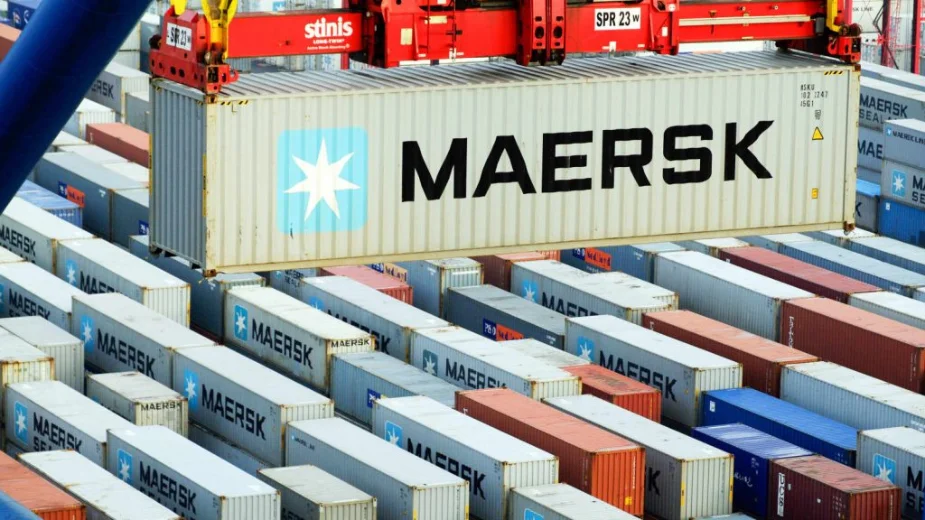
Maersk, the world's largest container shipping line, partnered to develop TradeLens, a blockchain platform for maritime logistics. The project connected more than 150 organizations including shipping lines, ports, customs authorities, and freight forwarders. Each shipment generates an average of 200 information exchanges and involves around 30 organizations. Blockchain helps digitize and authenticate this entire process on a single platform.
The lesson from TradeLens also reveals a real-world challenge: the platform shut down at the end of 2022 due to insufficient industry-wide participation. This proves that good technology alone is not enough, national or cross-industry sponsorship is required to ensure every link in the chain participates.
3. EBSI and the European supply chain
The European Union has deployed EBSI (European Blockchain Services Infrastructure), with one of its key applications being intra-bloc goods traceability. EBSI operates under the direct sponsorship of all 27 member states, illustrating a clear trend: Layer 1 blockchain infrastructure for supply chains needs national-level leadership and cannot rely on individual enterprises alone.
Vietnam context: Layer 1 blockchain infrastructure for the national supply chain
1. The current state of Vietnam's supply chain
Vietnam is one of the world's largest agricultural exporters. Import-export turnover for agricultural, forestry, and fishery products reached USD 53.01 billion in 2023 (Ministry of Agriculture and Rural Development). However, traceability remains a persistent weakness. Most Vietnamese agricultural products are exported in raw or semi-processed form, with low added value, partly because the entire value chain cannot be transparently demonstrated to international importers.
The amended 2025 Law on Product and Goods Quality has elevated traceability to a mandatory requirement for many product groups. Decision 1131/QĐ-TTg also identifies blockchain as a national strategic technology. Both the legal framework and market demand are creating favorable conditions for deploying Layer 1 blockchain infrastructure to serve the supply chain.
2. NDAChain and NDATrace: The backbone of national traceability
NDAChain is Vietnam's national Layer 1 blockchain infrastructure, owned and operated by Vietnamese, running on a PoA-qBFT consensus mechanism (Proof of Authority combined with the qBFT algorithm). The network is developing 49 validator nodes with processing capacity reaching 1,200 TPS and a block time of just 2 seconds. Validator nodes include SunGroup, Masan, and MISA, representing both the public sector and leading private enterprises.
On the NDAChain platform, NDATrace is built as a shared identification, authentication, and traceability platform for products and goods. NDATrace solves the same problem that IBM Food Trust solved for Carrefour, but at national scale and tailored to the specifics of the Vietnamese market.
How NDATrace operates in the agricultural export supply chain:
Farms record cultivation information, fertilizers, and pesticides on the blockchain via a mobile app.
Processing plants confirm receipt of raw materials and record processing procedures and quality inspections.
Transport units update routes, temperatures, and storage conditions in real time.
Export authorities verify documentation and issue certificates of origin on the blockchain.
International importers scan a code to view the product's full history and instantly verify authenticity.
This entire process runs on Layer 1 blockchain infrastructure under Vietnamese technological sovereignty. Data is stored domestically, complies with Vietnamese law, and does not depend on any foreign platform.

🔑 Read more: NDATrace: A shared traceability platform for businesses
3. Why does the supply chain need a national blockchain instead of a public blockchain?
The lessons from TradeLens show that a supply chain blockchain platform requires three elements that public blockchains struggle to deliver.
Data sovereignty. National commercial data cannot be stored on infrastructure that the country does not control. A national blockchain ensures data remains within Vietnam's legal jurisdiction, serving national interests.
Accountable governance. With the PoA mechanism, each validator node is a clearly identified legal entity, accountable under the law. Unlike public blockchains where validator nodes can be anonymous, national Layer 1 blockchain infrastructure puts governance accountability first.
Performance suited to national scale. With 1,200 TPS and a 2-second block time, NDAChain handles the transaction volume of a national supply chain without requiring volatile gas fees like those on Ethereum.
🔑 Read more: Blockchain in product traceability in Vietnam
Implementation roadmap: From pilot to national supply chain infrastructure
Deploying Layer 1 blockchain for supply chains does not happen overnight. International experience suggests an effective roadmap consists of three phases.
Phase 1: Pilot in priority sectors
Focus on industries with high export value and strict traceability requirements: seafood, coffee, cashews, rice. Connect upstream enterprises with inspection authorities and build standardized data recording procedures.
Phase 2: Cross-sector expansion
Connect logistics, customs, and banks into the network. Smart contracts automate international payments, document verification, and certificate issuance. This phase requires policy coordination across multiple ministries.
Phase 3: National digital trust infrastructure
Layer 1 blockchain becomes the backbone of all commercial activity, from domestic to international. Each Vietnamese product carries a "digital passport" verifiable globally. This is when national competitive advantage shines most clearl: transparency becomes added value, not merely a compliance requirement.
🔑 Read more: National blockchain - The "digital key" in protecting consumers
Challenges to overcome
Deploying Layer 1 blockchain infrastructure for the national supply chain is not without challenges. Recognizing them clearly helps with better preparation.
Uneven digital capability. Large enterprises can integrate blockchain quickly, but agricultural cooperatives and small producers need training support and simple tools. A user-friendly mobile app interface is the deciding factor.
Inconsistent data standards. Each industry and each export market has different data requirements. A national data standard for traceability must be developed, compatible with international standards such as GS1 and ISO 22005.
Legal framework still being finalized. Decision 1131/QĐ-TTg and the amended 2025 Law on Product and Goods Quality lay the foundation, but detailed guidance on the legal value of blockchain data, the responsibilities of participants, and dispute resolution mechanisms still needs to be added.
🔑 Read more: Vietnam's Layer 1 Blockchain: When Vietnamese master core technology
Conclusion: Transparency is a national competitive advantage
The global supply chain is shifting from a paper-based trust model to one based on digital evidence. Layer 1 blockchain is the trusted infrastructure layer that makes every transaction and every transfer of goods verifiable, auditable, and provable. Countries that adopt it early will gain a clear commercial advantage at the international negotiating table.
With NDAChain and NDATrace, Vietnam is building digital trust infrastructure that it owns. No dependence on foreign platforms. No trade-off in data sovereignty. Every Vietnamese export product can carry tamper-proof transparent evidence, running on the national blockchain backbone. This is the path toward Transparency, Efficiency, and Prosperity.
👉 Learn more about NDAChain - National Layer 1 blockchain infrastructure for supply chain and traceability: https://ndachain.vn