What Is a Decentralized Identifier (DIDs)?
A Decentralized Identifier, or DID, is a global standard for digital identity that allows individuals, organizations, or products to own an independent digital identity without relying on centralized platforms or intermediaries. Through DID, users maintain full control over their identity data under the self-sovereign identity model, while securely proving and verifying identity in digital environments and online transactions.
Unlike traditional eKYC or centralized identity systems, DID is designed from the ground up as an open global standard. It enables cross-border verification and seamless integration with emerging models such as product traceability, digital product passports, cross-border trade, and logistics.
Vietnam’s First Globally Interoperable DID Method
By being listed in the global W3C Registry, NDAChain positions Vietnam among the leading countries worldwide in decentralized digital identity infrastructure.
In Vietnam, NDAChain is the first national Layer 1 blockchain platform recognized in the W3C Registry, with a long-term vision to support data authentication and interoperability for over 100 million citizens. Through the did:nda method, NDAChain enables the creation, management, and verification of digital identities for individuals, organizations, products, and data, the issuance of internationally verifiable credentials, and full independence from proprietary platforms or intermediary-controlled ecosystems.
As a result, Vietnamese data can be read, understood, and verified by international systems. Core standards such as DID Core, DID Documents, and Verifiable Credentials ensure that identity data is not confined within national boundaries but can interoperate directly with global platforms, organizations, and partners. This capability is increasingly critical as major markets such as the European Union, the United States, and Japan require open-standard data verification rather than closed or proprietary systems.
Strengthening Regional and Global Leadership in Decentralized Identity

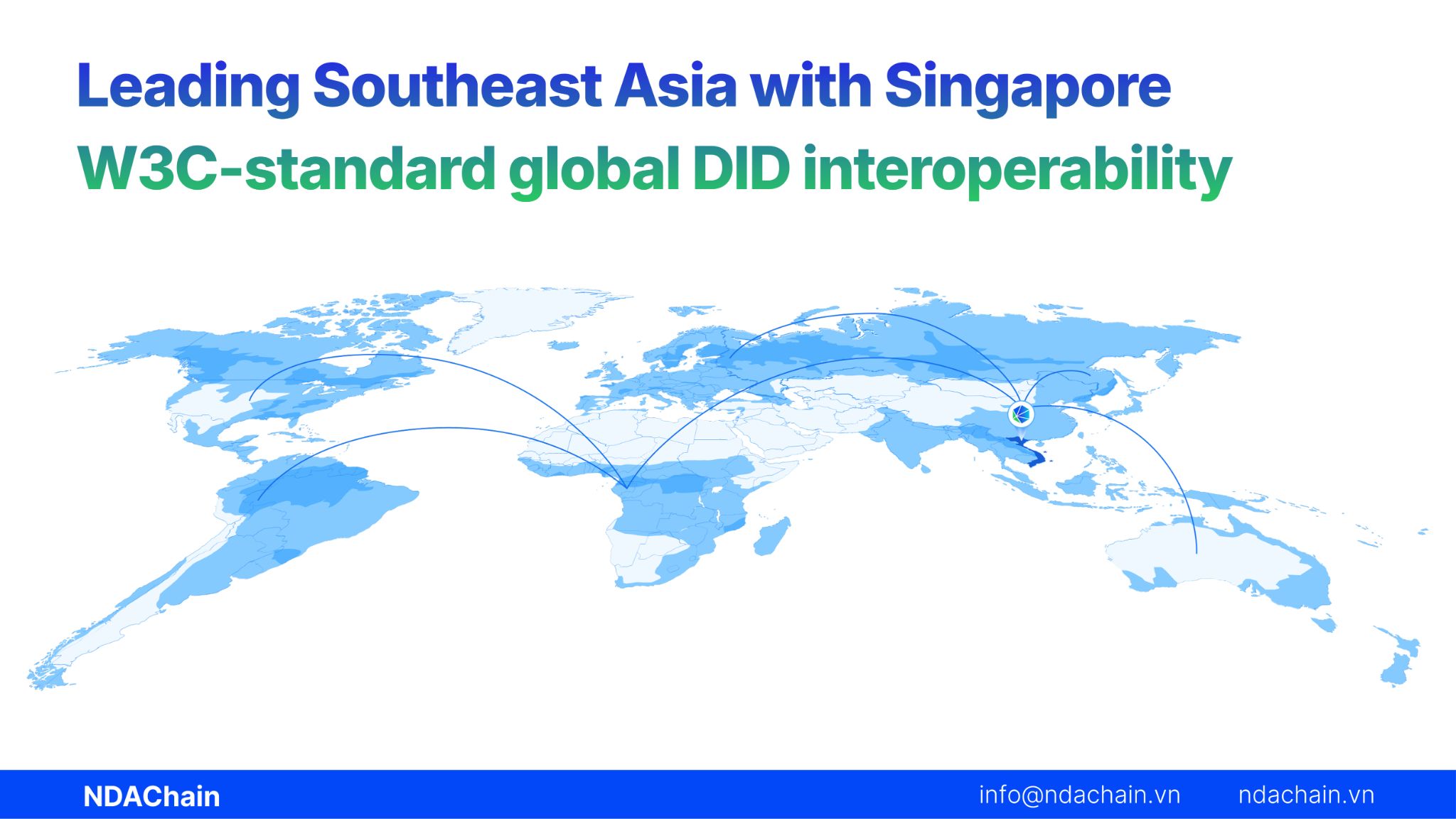
With did:nda, Vietnam now leads Southeast Asia alongside Singapore in deploying DID at a global scale. However, the strategic approach differs significantly. Singapore adopts a use-case-driven model, focusing on trade facilitation, finance, and commercial transactions to optimize international connectivity and business efficiency.
In contrast, NDAChain positions DID as a foundational national data infrastructure rather than a transaction-specific solution. The approach extends decentralized identity across multiple core layers, including national digital identity management through NDAKey, product traceability through NDATrace, and data governance for locations and activities. This architecture places DID at the backbone of the national data framework, serving both public governance and long-term data economy development.
More broadly, did:nda has brought Vietnam into the top ten Asian countries with DID methods registered at W3C, alongside Japan, South Korea, and India. By adhering to the same international standards, a trusted identity interoperability space is formed, allowing DIDs across countries to be mutually verified without bilateral integrations or dependence on intermediary platforms. This effectively establishes a digital passport for Vietnamese data in the global data economy.
A New Pillar for Data Sovereignty and Global Integration

NDAChain’s DID infrastructure creates a long-term strategic advantage for Vietnam in the digital economy era. It fundamentally transforms how Vietnam participates in cross-border transactions, shifting from manual, intermediary-dependent verification toward open-standard, verifiable, and trust-by-design data authentication. As global markets increasingly demand transparency, traceability, and identity verification, internationally interoperable DID becomes a prerequisite for Vietnamese goods, enterprises, and data to be accepted and integrated into global value chains.
Vision Toward 2026 Building the National Data Ecosystem
Looking ahead to 2026, NDAChain focuses on building a comprehensive national data architecture for the digital era, where data is identified, authenticated, interoperable, and efficiently utilized on a trusted foundation. This architecture enables Vietnam to proactively integrate into the global digital economy, assert data sovereignty, and unlock sustainable growth. With NDAChain, Vietnam not only keeps pace with digital transformation but also establishes a proactive and credible position in the global data economy, grounded in sovereignty, standards, and transparency.