Vulnerabilities in the pharmaceutical supply chain
On January 28, 2026, Thanh Hoa Police dismantled two large-scale interprovincial networks producing and trading counterfeit medicines and dietary supplements, prosecuting 26 individuals. Investigators revealed that since 2024, the ring had generated more than VND 50 billion in illicit profits. Several products contained Sibutramine, a banned active substance posing serious health risks, distributed through wholesale drug markets and e-commerce platforms.
This case once again exposed a major weakness in Vietnam’s pharmaceutical supply chain: data on origin, testing, manufacturing, and distribution remains fragmented among enterprises, pharmacies, and regulators. When counterfeit products enter the system, there is virtually no real-time verification mechanism for patients, pharmacists, or inspectors to independently authenticate them.
Traditional traceability models such as standalone QR codes, GS1 barcodes, or internal ERP systems can support localized management, but they are insufficient to create a shared trusted ledger for the entire pharmaceutical sector. In this context, the national blockchain is emerging as a new infrastructure layer for pharmaceutical traceability, ensuring data integrity, interoperability, and immutability once recorded.
Counterfeit drugs in 2026: An urgent challenge for Vietnam’s healthcare sector
From Vietnam to the Global Stage
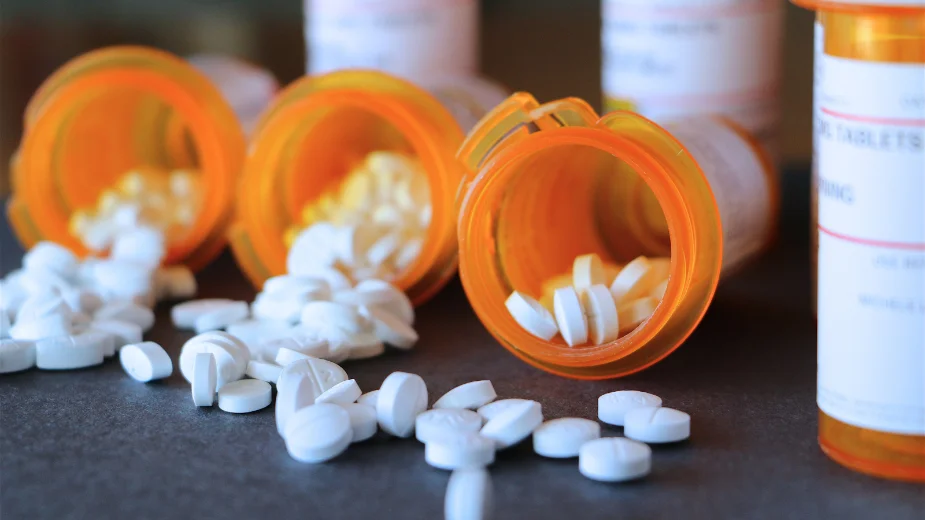
The counterfeit drug crisis is not isolated to Vietnam. According to the World Health Organization (WHO), approximately 1 in 10 medical products in low- and middle-income countries is substandard or falsified, with a global failure rate of 10.5%. The estimated global social cost of counterfeit medicines reaches USD 30.5 billion annually. In Southeast Asia, the rate exceeds 30% in some areas, posing a severe public health risk.
In Vietnam, major crackdowns in early 2026 demonstrate increasingly sophisticated counterfeiting methods. Following the Thanh Hóa case, Ho Chi Minh City Police dismantled another counterfeit drug network disguising fake medicines as imported products. The Ministry of Public Security ordered expanded investigations as counterfeit products were found circulating through both traditional wholesale markets and e-commerce platforms, passing through multiple intermediaries before reaching patients.
Why current pharmaceutical traceability systems are insufficient
Vietnam’s pharmaceutical sector has implemented traceability systems for years: drug registration numbers issued by the Drug Administration of Vietnam, GS1 barcodes, QR codes printed on packaging, and Ministry of Health lookup systems. However, three structural weaknesses prevent these systems from effectively combating large-scale counterfeiting:
First, fragmented data. Manufacturers, distributors, warehouses, pharmacies, and hospitals each maintain separate systems. When incidents occur, authorities must manually trace the chain via calls and official correspondence, often taking days or weeks.
Second, editable data. Sophisticated counterfeiters have reprinted packaging, duplicated QR codes, and altered paper documentation. When source data lacks tamper-resistance, scanning a QR code may still display “valid information”, even if the medicine inside is fake.
Third, lack of cross-entity digital identity. A distributor in Hanoi selling to a pharmacy in Ho Chi Minh City currently lacks a standardized national technical mechanism for mutual legal identity verification. Transactions rely on contracts and invoices, which can be forged without an independent distributed notarization layer.
🔑 Read more: National Blockchain: A digital shield against counterfeit goods
Why pharmaceutical traceability requires a National Blockchain
Technical characteristics aligned with pharmaceutical supply chains
A pharmaceutical product in a standard supply chain may pass through multiple intermediaries: raw material suppliers, manufacturers, testing units, logistics providers, distributors, hospitals, pharmacies, and end users. Each step generates new data that must be authenticated, interoperable, and immutable.
This is precisely the problem blockchain was designed to solve. Through a distributed ledger mechanism, every transaction — such as warehousing, dispatch, or batch transfer, is recorded as cryptographically linked entries. Once validated and written to the blockchain, no party can alter the data without leaving a trace.
As a result, all stakeholders, from the Ministry of Health and pharmaceutical enterprises to pharmacies and citizens, can verify the origin and circulation history of medicines in real time without relying on a single centralized intermediary.
However, public blockchains such as Bitcoin or Ethereum are not suitable for pharmaceuticals. Medical and patient data are sensitive categories requiring strict access control, accountability tracing, and compliance with the 2025 Personal Data Protection Law.
Therefore, a permissioned national-scale blockchain model is more appropriate. In this model, validator nodes are clearly identified and legally accountable. Personal data or medical records are not stored directly on-chain; instead, cryptographic hashes and Verifiable Credentials (VCs) are recorded, ensuring authentication while protecting privacy.
International reference models
Many countries and international organizations have begun applying blockchain to enhance authentication and traceability in sensitive sectors such as pharmaceuticals and food.
In Europe, the Falsified Medicines Directive (FMD) requires all prescription drug packages to carry a unique identifier connected to a pan-European verification system. Blockchain is being explored as a trusted infrastructure layer to enable cross-border interoperability.
In supply chains, IBM Food Trust in partnership with Carrefour demonstrated how blockchain can reduce food traceability time from days to seconds. The same principle applies to pharmaceuticals, where data verification standards are even more stringent.
According to the World Economic Forum (WEF), blockchain can reduce supply chain costs by approximately 20–40% in industries requiring strict traceability. Pharmaceuticals are considered among the earliest beneficiaries due to high anti-counterfeiting demands.
🔑 Read more: EU digital product passport and the role of National Blockchain in traceability
The role of NDAChain in pharmaceutical traceability
NDAChain - A trusted infrastructure layer for Vietnam’s pharmaceutical sector
NDAChain is positioned as a national permissioned blockchain platform. The network is developing 49 public-private validator nodes with participation from major organizations and enterprises such as the National Data Association, PILA, SunGroup, Zalo, MISA, Sovico, VNVC, and others.
With processing capacity of approximately 1,200 transactions per second, NDAChain is designed to support national-scale data operations, including high-volume sectors such as pharmaceuticals and healthcare.
🔑 Read more: The National Blockchain platform can process 1,200 transactions per second
NDAChain does not replace the Ministry of Health’s management systems or enterprises’ internal ERP software. Instead, it serves as a core trusted authentication layer where key lifecycle events of medicines, from production and testing to distribution, are recorded as immutable and independently verifiable data.
NDATrace - A digital passport for every Vietnamese drug batch
Built on NDAChain infrastructure, NDATrace is a national shared identity, authentication, and traceability platform envisioned as a “digital passport for Vietnamese products,” with pharmaceuticals as a priority category. Each drug batch is assigned a unique digital identifier linked to a comprehensive lifecycle data record:
Origin record: Raw material sources, suppliers, import dates, and test results, digitally signed by relevant legal entities.
Production record: Batch number, manufacturing date, expiration date, production line, finished-product test results, with cryptographic fingerprints recorded on NDAChain.
Distribution record: All warehousing, transportation, and transfer events stored as immutable blockchain transactions.
Retail record: When sold to the end user, the lifecycle is closed, helping detect duplicate or fraudulent identifier use.
Patients only need to scan the QR code on the packaging to access the full history, relying not on trust in the manufacturer or pharmacy, but on technical proof anchored in national infrastructure.
🔑Read more: Pharmaceutical supply chain transparency: A foundation for protecting public health
On-Chain digital identity for pharmaceutical enterprises
A key factor is on-chain digital identity. Each participating manufacturer, distributor, and pharmacy is issued a digital identifier under the did:nda method, Vietnam’s first DID method registered on the global W3C Registry. When an entity signs a warehouse dispatch transaction, the signature is independently verified by validator nodes, preventing forgery and repudiation.
This mechanism immediately addresses interprovincial distribution challenges: a pharmacy in Ho Chi Minh City can instantly verify that a drug batch originates from a legitimate distributor in Hanoi without phone verification or official paperwork. Health inspectors can trace the full chain from pharmacy back to factory within seconds.
🔑 Read more: NDAChain the trusted data backbone for Vietnamese enterprises
Legal framework and opportunities for Vietnam’s pharmaceutical industry
Regulatory readiness
The year 2026 marks a pivotal moment as multiple layers of policies and legal frameworks begin to converge, laying the foundation for implementing pharmaceutical traceability on a national blockchain.
Decision No. 21/2026/QĐ-TTg identifies blockchain as one of the country’s strategic technologies. Subsequently, Decision No. 3090/QĐ-BKHCN incorporates blockchain into the category of shared infrastructure within the National Digital Architecture Framework. In parallel, the 2024 Data Law requires the assurance of data integrity and traceability, while the 2025 Personal Data Protection Law sets higher standards for access control and transparency in data processing, requirements that align closely with the permissioned blockchain model.
Specifically for the pharmaceutical sector, the amended 2025 Law on Product and Goods Quality also expands requirements for quality disclosure and traceability for essential goods, with pharmaceuticals classified as a high-priority category.
In the context of the Ministry of Health’s declaration of a “zero-tolerance war” against counterfeit drugs, the national blockchain is being viewed as a technical infrastructure layer capable of supporting the realization of pharmaceutical supply chain transparency in Vietnam.
International standards integration and export opportunities
Beyond the domestic market, Vietnam’s pharmaceutical industry is also facing significant pressure from international traceability standards. Key export markets such as the EU, the United States, and Japan are tightening requirements for supply chain data transparency for pharmaceuticals and other essential goods.
In Europe, the European Union is implementing the Digital Product Passport (DPP) under the ESPR Regulation, requiring products entering the market to be accompanied by a “digital passport” containing comprehensive information on origin, manufacturing, and product lifecycle. According to the European Commission, an average product may pass through 10–15 companies within the supply chain, making multi-party data verification particularly complex.
In this context, blockchain is regarded as one of the few technologies capable of ensuring data integrity and verifiability across multiple independent organizations, a factor that is increasingly becoming a mandatory requirement in international trade.
NDAChain is designed to be compatible with international standards (W3C DID, Verifiable Credentials), enabling a batch of Vietnamese pharmaceuticals exported to the EU to carry digital proof that can be verified by European regulatory authorities without the need to establish a separate technical connection. This represents a strategic advantage for Vietnamese pharmaceutical enterprises seeking to enhance their competitiveness in the global market.
🔑 Read more: Blockchain in traceability: Strategic pillar for Vietnam's digital economy
A solution for the pharmaceutical sector and patient trust

For pharmaceutical enterprises
Pharmaceutical traceability on a national blockchain is not only an anti-counterfeiting tool, but also a competitive advantage for reputable pharmaceutical companies. When each batch of medicine is linked to a transparent and verifiable data record, participating enterprises can more easily build trust with hospitals, pharmacies, and consumers. Verification on NDAChain also provides distributors and healthcare facilities with an additional technical basis to prioritize products whose origins have been clearly traced and authenticated.
In the event of an incident, companies can quickly and accurately identify the affected batch to isolate and recall it, instead of conducting broad recalls as seen in many current models. This significantly reduces operational costs and brand risk.
According to various international studies, blockchain can help reduce supply chain costs by approximately 20–40% in industries that require strict traceability, such as pharmaceuticals. This represents meaningful room for enterprises to optimize operations while enhancing service quality and reliability for patients.
🔑 Read more: ECO Pharma applies NDATrace to digitize pharmaceutical traceability
For patients
For patients, the greatest value of pharmaceutical traceability on a national blockchain lies in verifiable trust. Instead of relying solely on the reputation of pharmacies or QR codes that can be duplicated, users can directly access the record of each medicine batch from raw material origins, production date, and testing entity to distribution history, on a shared data infrastructure with independent verification capabilities.
This is also how digital trust is formed in a data economy: not based on one-sided claims, but on data that can be technologically verified. The model of “State-led, enterprise participation, citizen benefit” therefore moves beyond macro-level orientation and is realized directly in essential products and services such as pharmaceuticals.
From fighting counterfeit drugs to building a digital trust infrastructure for healthcare
The fight against counterfeit drugs in Vietnam in 2026 cannot be won through fragmented software systems operated by individual enterprises or provinces. It requires a shared national infrastructure layer where the identity, origin, and history of each medicine batch are immutably recorded and verifiable by any stakeholder.
That is precisely the role of pharmaceutical traceability on a national blockchain. It does not replace health authorities, nor compete with pharmaceutical enterprises; rather, it serves as a trusted infrastructure layer that enables the entire ecosystem to operate on a single source of truth. Only then can the “zero-tolerance war” against counterfeit drugs be equipped with technical tools commensurate with political determination.
NDAChain is one of the foundational building blocks of Vietnam’s national digital data infrastructure, and pharmaceutical traceability is among the clearest use cases demonstrating its value.
👉 Learn more about NDAChain - a blockchain platform mastered by Vietnamese experts and register for a free demo for the pharmaceutical sector at https://ndachain.vn/en.