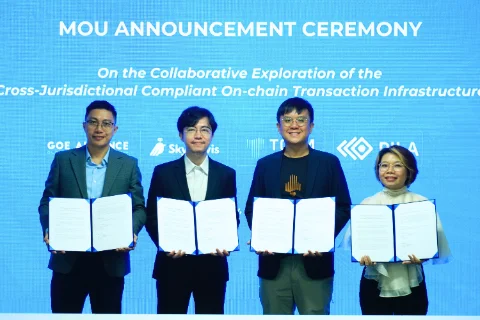
PILA (Vietnam) and TOTM Technologies (Singapore) have signed a Memorandum of Understanding (MOU) to jointly advance the development of Cross-border Digital Trust Infrastructure across ASEAN. The collaboration will establish a trusted digital verification foundation for cross-border transactions, enabling digital trade, reducing verification costs, and strengthening trust among businesses, financial institutions and regulatory authorities.
__ký_kết_hợp_tác_chiến_lược_cùng_TOTM_Technologies_(Singapore)._.webp)
As the first implementation under this long-term collaboration, the two companies will jointly research and develop a Proof of Concept (PoC) applying Verifiable Credentials (VCs) to Letters of Credit (L/Cs) between participating banks in Vietnam and Singapore. The initiative will be built on the Infocomm Media Development Authority (IMDA)’s TradeTrust framework, enabling both companies to establish a trusted digital trade corridor between the two countries.
The First Initiative: Faster, Independent L/C Verification - Without Changing Any of the Existing Legal Procedures for L/Cs
Letters of Credit (L/Cs) remain one of the most widely used and important payment instruments in international trade. However, verifying an L/C issued by a foreign bank often requires banks to make phone calls, check information through SWIFT, and exchange and reconcile supporting documents with the relevant parties. This multi-step process can take several days, increase costs, and create potential risks of errors or fraud.
To enhance verification efficiency without changing the existing L/Cs operating model, PILA and TOTM Technologies will jointly develop a Proof of Concept (PoC) applying VCs to L/Cs transactions between participating banks in Vietnam and Singapore.
Under the PoC, VCs will be introduced as a Trust Layer that operates alongside existing L/Cs workflows, enabling trusted verification while preserving current legal frameworks, banking procedures and payment obligations.
For example, when a participating bank in Vietnam issues a L/Cs, it simultaneously issues a VCs attesting to the authenticity of the L/C. This enables other participating banks to verify the issuer and the integrity of the information.
When the L/Cs and its accompanying VCs are received by a participating bank in Singapore, the receiving bank can immediately verify the issuer, document integrity and authenticity through a TradeTrust-compliant verification mechanism, significantly reducing the need for manual document reconciliation and verification.
VCs serve solely as a verification mechanism. They do not create any payment obligations, replace L/Cs, or alter the legal responsibilities of the parties under applicable laws and established practices. As they operate entirely outside the legal framework governing L/Cs, the solution can be tested and further scaled based on trust and technology, without requiring any legal changes to the L/C itself.
Under the partnership:
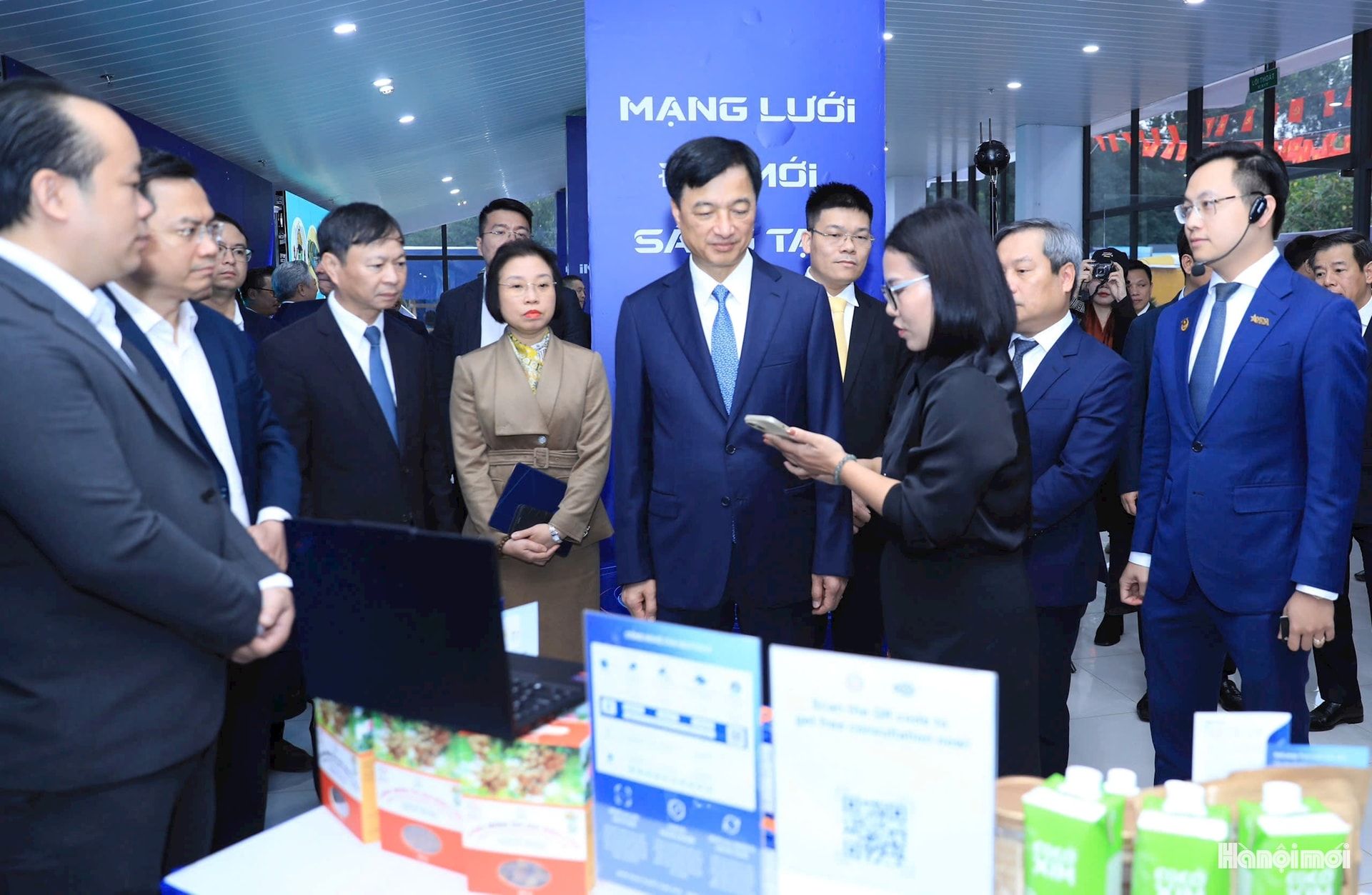
PILA operates the VC issuance and verification infrastructure in Vietnam through NDAKey, built on blockchain technology that provides a trusted registration and verification layer for validating the issuer, status, and integrity of the information.
TOTM Technologies serves as the technical capability provider and domain subject matter expert, integrating the solution with IMDA's TradeTrust framework while contributing its expertise in blockchain, biometric identity, and product traceability.
This initiative aims to shorten document verification times, reduce manual reconciliation, and establish a network of participating banks in Vietnam and Singapore that can trust one another through a shared infrastructure for cross-border transactions.

Building an ASEAN Digital Trust Network
The Letter of Credit initiative is the first phase of a broader roadmap. Building on the trust foundation established through this phase, the two companies intend to explore further areas of collaboration across ASEAN, including Digital Product Passports (DPP). By combining PILA's traceability infrastructure with TOTM's product identity and interoperability capabilities, the partnership aims to deliver trusted, verifiable Digital Product Passports across the Vietnam, Singapore and Indonesia trade corridors, helping exporters meet compliance requirements in key international markets.
In addition, the two companies will explore the development of trusted Cross-Border Payment Settlement infrastructure through engagement with regulators and participation in regulatory sandboxes. The initiative will initially focus on Vietnam, Singapore, and Indonesia before expanding across ASEAN. These initiatives will be pursued in accordance with the regulations of each respective country and with the participation of regulators, financial institutions, and other relevant stakeholders, including potential participation in controlled testing environments (sandboxes) where applicable.
The initiative reflects a shared vision to advance Digital Trust Infrastructure for cross-border trade. This aligns with the broader goals of ASEAN's Digital Economy Framework Agreement (DEFA), which seeks to promote digital trade, facilitate trusted cross-border data flows, and enhance electronic payments and electronic transactions across the region.
Chan Wei Jie, Group CEO & Board Director of TOTM Technologies said:
“As the world embraces multipolarity and economic fragmentation, it's more important now than ever that Southeast Asia is united and inter-connected as an economic region. Trusted Infrastructure, backed by sovereign identity verified credentials, remains fundamental in driving sustainable cross border commercial models.”
Nguyen Phu Dzung, Chief Executive Officer of PILA, said:
“The next phase of the digital economy will be defined not only by connectivity, but by trust. As digital identities, electronic credentials and data become securely verifiable and recognised across borders, digital transactions will become faster, more transparent and significantly more efficient. This is the long-term vision driving PILA's commitment to building Cross-border Digital Trust Infrastructure - not only for Vietnam, but for a more connected and interoperable ASEAN.”
By combining PILA and TOTM's capabilities in developing and operating Digital Trust Infrastructure with their deep understanding of the respective markets across the region, the two companies aim to establish trusted digital trade corridors across ASEAN.